Four keys to unlocking literacy across tiers of instruction
Reading unlocks opportunity for every child. But lasting literacy gains require more than programs and materials; they require a system that works. Learn how Lexington Public Schools implemented the One95 Literacy Ecosystem and uncover four proven keys to building a successful, tiered literacy ecosystem.
It’s time to get literacy right. A child’s greatest opportunity to develop reading skills is precious and limited. There is no time to squander. Reading sets every child free to reach their full potential. A successful literacy ecosystem empowers educators to unlock and strengthen literacy skills for all students. But a literacy ecosystem is more than just a collection of materials and methods—you need to rely on a system that works.
In this post, you’ll see how implementing the One95 Literacy Ecosystem transformed literacy learning in Lexington Public Schools in Lexington, Nebraska. And you’ll discover 4 keys of a successful literacy ecosystem that will empower you to unlock and strengthen literacy skills for all your students.
I am SO excited for the initial data we are getting from our students. We are seeing tremendous growth. The consistency from Tier 1 to Tier 2 is unparalleled to anything we have ever used. We feel that’s the secret sauce. We are so grateful for this program!!
Ann Foster
Literacy instruction across tiers in focus: Lexington Public Schools
Snapshot 2023-2024
- 9 Preschool Classrooms, 4 Elementary Schools, 1 Middle School, and 1 High School
- Location: Lexington, Nebraska
- Enrollment: 3229
- Free/Reduced Price Meals: 76%
- English Language Learners: 42%
- High Ability Learners: 7%
- Special Education: 14%
- 0.37% American Indian/Alaska Native, 0.56% Asian, 9.07% Black, 76.62% Hispanic, 0.22% Native
- Hawaiian or Other Pacific Islander, 12.39% White, 0.77% multi-racial
Ann Foster is currently superintendent of Brady Schools in Brady, Nebraska. In a recent conversation, she spoke with 95 Percent Group’s team about implementing One95 Literacy Ecosystem in Lexington Public Schools when she was the Elementary Curriculum Coordinator. Here’s what she had to say about how they started and the positive changes they observed in their students:
“In 2020, awareness of the science of reading was really coming to fruition. There was this sense of immediacy…we knew we needed to ensure that all our teachers were trained. With our ESSER money, we had all teachers go through LETRS training in the elementary schools.
We were using a Tier 1 program that we’d built ourselves along with an ELA curriculum but it wasn’t moving the needle quickly enough. We began using 95 Percent Group Tier 2 intervention materials right after COVID, around the end of 2020, the beginning of 2021.
But shortly after that, we realized we had a disconnect between what kids were learning in Tier 1 and the strategies and skill set they were learning in Tier 2. It’s hard when kids struggle, especially in Lexington. We are 80% poverty, almost 50% EL.
Kids cannot waste cognitive time attending to trying to figure out what the teacher is teaching. We have to have a sense of immediacy. That’s when I saw the necessity of having Tier 1 and Tier 2 in alignment, and Tier 3 in an alignment where the language is the same, and the strategies and the methodology are all the same, so that kids aren’t trying to figure out….’Well, okay, in this program, we call it Magic E. In this program, the teacher’s calling it Sneaky E’. I’m talking about first grade, probably, more than anything. That’s a first grade example.
So we went all in, district-wide, K-5 with 95 Percent Group’s Tier 1 and Tier 2 phonics solutions when we saw the alignment, and consistency of language, strategies, and skills that the students were learning, and when we saw that what the teachers were teaching was the same from Tier 1 to Tier 2 to Tier 3. That really is the secret sauce. That is where children start to grow, because they can now attend to ‘Oh, I know what this is. And I just need more practice, well, more rigor in it,’ as opposed to, ‘Oh, this is a whole new program that I’m going to try to figure out to try to close my own skill gap.’”
Implement one literacy system that works
The largest benefit is that we have a system.
Kelly Harkins
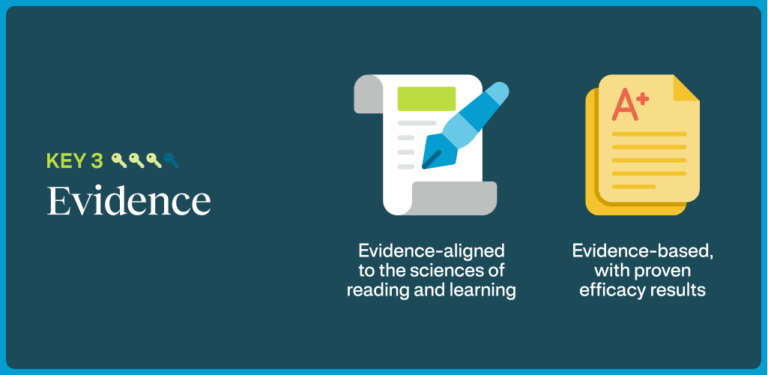
A literacy ecosystem is more than just a collection of materials and methods. An effective literacy ecosystem is an intentionally planned approach of aligned, cohesive instructional design and curriculum resources that are both evidence-aligned to the sciences of reading and learning and evidence-based, with proven efficacy results.
An effective literacy ecosystem aligns literacy instruction across grades and tiers, optimizing learning time with additive, not replacement instruction. A true literacy ecosystem maximizes outcomes for all students, not just by meeting them where they are, but accelerating them forward. This is the standard by which we should hold all of our literacy initiatives.
The new tiered solutions in One 95 Literacy Ecosystem™ integrate evidence-based, science of reading-aligned literacy products and professional learning into one cohesive system that supports consistent instructional routines across all grades and tiers. Offerings are specifically designed for individual grades with grade-level specific content tailored to students in grades K-5 (compared to just “for young readers”).
“School districts of all sizes benefit from our Tier 1, 2, and 3 solutions-based offerings. Educators gain consistent, familiar routines and language within and across tiers. The value they gain is that our resources are proven to make a difference and work together. And 95 Percent Group’s literacy solutions integrate with any existing ELA curricula that a school may be using. Our supplemental, tiered solutions complement rather than compete with existing resources across any literacy program,” said Kevin Stehr, Chief Revenue Officer, 95 Percent Group.
The 4 keys for unlocking literacy
These 4 keys—necessary for an effective literacy ecosystem—will empower you to unlock and strengthen literacy skills for all your students.
1. Alignment
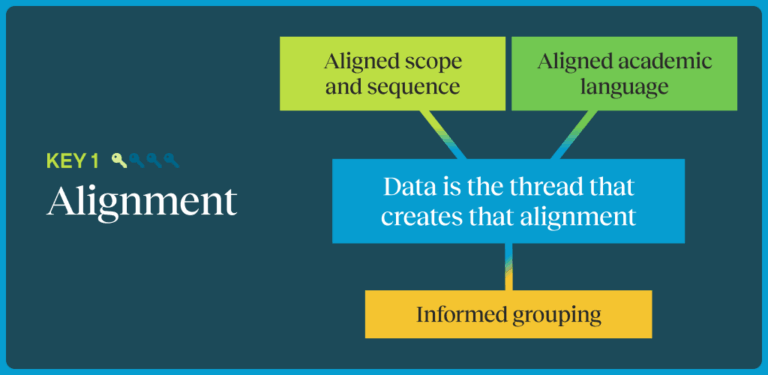
Alignment is a foundational key for unlocking literacy—alignment to the vast, interdisciplinary body of research on the science of reading and learning, alignment of academic language, alignment of the scope and sequence, and alignment of the data—across every grade and tier.
With alignment of the literacy ecosystem, the entire literacy team of district leaders, building leaders, literacy specialists and educators gain a shared vocabulary and understanding to better support students and ensure all their students learn to read.
Laura Stewart, Chief Academic Officer, emphasizes: “It’s important to note that for all three tiers of instruction, the scope and sequence of foundational skills is the same; it is the dosage and intensity of instruction that differs.”
Aligned data connects tiers of instruction, pinpoints students’ needs, informs grouping, ties to instruction, and provides visibility to all invested parties.
2. Consistency
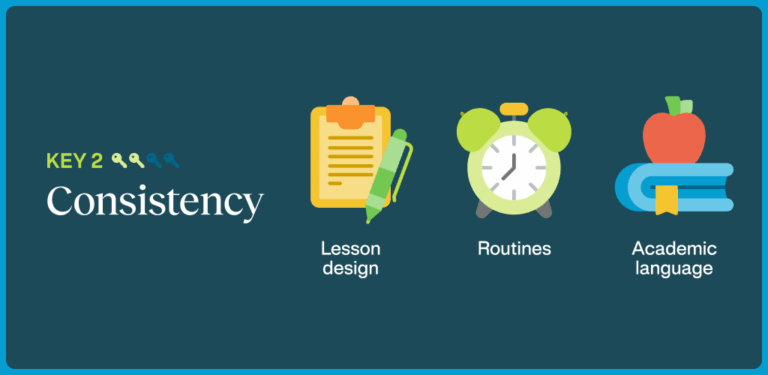
In a connected and consistent literacy ecosystem, educators become proficient in a consistent approach to instruction, which allow them to focus on what matters most—teaching. Students can focus on learning to read instead of wasting precious time learning new language and routines every time they move from grade to grade or tier to tier. When they do move into another tier, it is for brief and specific skill learning that allows them to get what they need quickly and move back into Tier 1. The cul-de-sac of intervention becomes a thing of the past.
Kevin Stehr pointed out how the literacy ecosystem contributes to consistency for educators: “The [ecosystem] approach brings together complementary solutions that reinforce one another while mapping to an educator’s daily workflow, responsibilities, and objectives. This model also further reinforces best practices teachers can learn from, share, and test as they embark on their science of reading professional development journey.”
Consistency of lesson design, instructional routines, and language allows student to focus cognitive energy from process to learning.
3. Evidence
Director of Research at 95 Percent Group, Diana Betts, EdD, explains why evidence is key: “At the heart of every educational decision is a desire to do what’s best for students. Research that is transparent and trustworthy gives educators the clarity and confidence to choose tools that truly support learning and growth. When all stakeholders can rely on the evidence behind these choices, we create stronger, more unified support for student success.”
95 Percent Group depends on independent, third-party research to ensure the efficacy of all its products. The One95 Literacy Ecosystem aligns with the science of reading evidence base, and the efficacy of our products stands on rigorous studies, done over multiple years, in many different types of schools and with a variety of student populations.
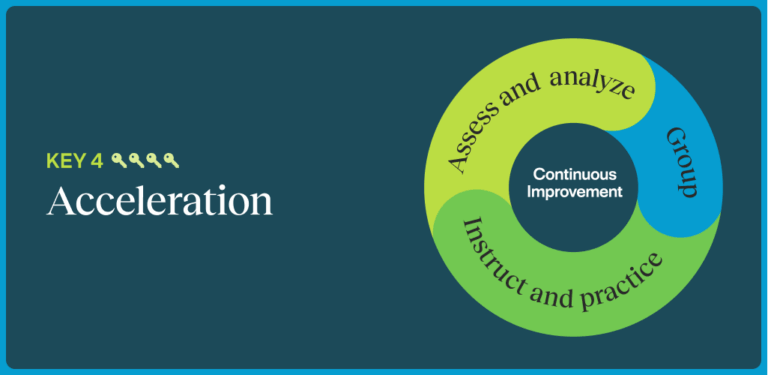
4. Acceleration
A true literacy ecosystem maximizes outcomes for all students, not just by meeting them where they are, but accelerating them forward. A cycle of continual improvement makes it all possible—a cycle of continual improvement ensures no child will be stranded in a cul-de-sac of intervention. A cycle of success and growth optimizes learning time with additive, not replacement instruction. Children who are testing on grade level are accelerated forward as well.
Chief Academic Officer Laura Stewart explains, “Our literacy ecosystem accelerates student progress, supporting each child in realizing their full potential and progressing to grade level and beyond.”
95 Percent Group’s tiered solution glossary
95 Tier 1 Phonics Solution seamlessly integrates explicit, K-5 evidence-based instruction with 95 Phonics Core Program® and purposeful student practice using Sortegories™, a teacher-directed tool that delivers targeted phonics, vocabulary, morphology, and syntax practice, all within the daily ELA block.
95 Tier 2 Phonics Solution seamlessly connects diagnostic assessments and grouping capabilities with aligned evidence-based intervention instruction to reduce skill deficit diagnosis and set-up time, enhance instructional flexibility, deliver targeted instruction to close skill gaps, and provides dynamic data to monitor student progress. It includes: 95 Literacy Intervention System™ that enables educators to provide tailored support, monitor progress, and drive efficiency with real-time data, and 95 Phonics Lessons Library™ for Intervention 2.0, a comprehensive, evidence-based instructional program that enables teachers to deliver targeted lessons to meet unique student needs.
95 Tier 3 Literacy Solution, featuring 95 Reading Achievement Program™ (95 RAP™), is a digital instructional solution designed to enable educators to deliver individualized, small-group intensive reading interventions for K-12 students and empower educators through a comprehensive professional learning program.

The new tiered solutions in One 95 Literacy Ecosystem™ integrate evidence-based, science of reading-aligned literacy products and professional learning into one cohesive system that supports consistent instructional routines across all grades and tiers. Offerings are specifically designed for individual grades with grade-level specific content tailored to students in grades K-5.
Accelerate your instruction across every tier
Take a deeper dive into evidence-based Tier 1, Tier 2, and Tier 3 instruction. Watch our free, on-demand webinar series to explore how structured literacy solutions can strengthen outcomes across all levels of support. Click here to access now.