Why your classroom needs decodable text—and what to consider
Decodable text gives students purposeful, phonics-aligned practice that builds accurate, fluent reading and confidence, offering teachers a research-aligned bridge from skill instruction to real reading success.
In this blog post we will:
- Discuss why decodable texts are critical to fluent reading acquisition
- Give you a tour of our unique fiction and nonfiction decodable series and
- Introduce you to some of the 95 Percent Group team and partners responsible for bringing forward this collection in One95 Literacy Ecosystem™.
What is decodable text and why does it matter?
What is decodable text? Chief Academic Officer Laura Stewart provides a definition of decodable text by Anne Castles, Kathleen Rastle, and Kate Nation: “Decodable books are texts written for children that consist primarily of words they can read correctly using the grapheme-phoneme correspondences that they have learned (with the exception of a few unavoidable irregular words).”
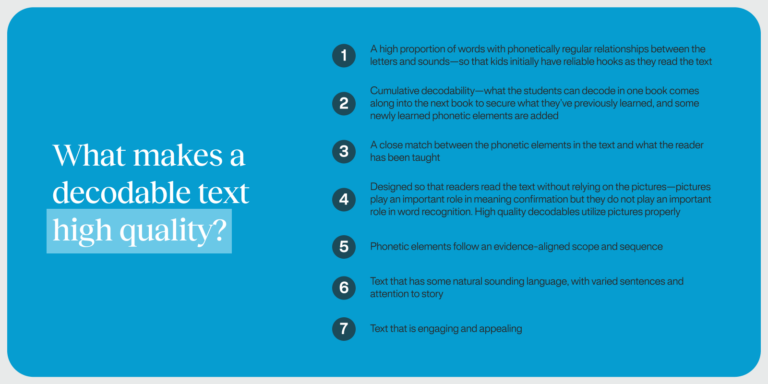
In our blog post, Decodable books: A comprehensive guide for educators and parents, Laura Stewart describes a key feature of decodable text as “purposefully designed text.” She explains:
“We want to make sure that decodable text aligns with what we have already taught. Decodable texts allow our students to apply the fine skills that they’re learning as they’re learning them. It allows them to develop the decoding habit that will lead to accuracy, fluency, and mastery, building young readers’ confidence.”
According to reading development expert Linnea Ehri (2014), decoding facilitates orthographic mapping. In contrast to leveled text, which encourages students to guess at words they don’t know, decodable text helps students develop the habit of looking at the phonemes and graphemes within words as the primary way to identify and recognize words.
It’s here! A complete collection of decodable texts
From early foundational skills to middle school intervention, 95 Percent Group now offers an innovative and engaging collection of decodable texts and companion teacher guides to support structured literacy for K-1 and grades 2–8, spanning tiers 1 and 2.
Let’s dive into our exciting collection of high-quality decodable texts…
Decodables for Tier 1 core instruction
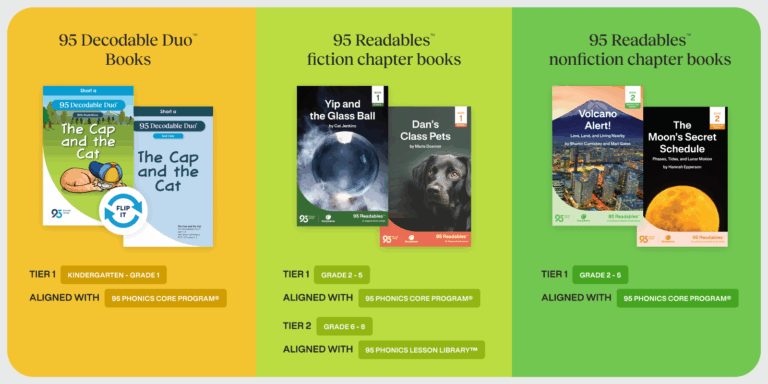
95 Decodable Duo™ books—for K-1
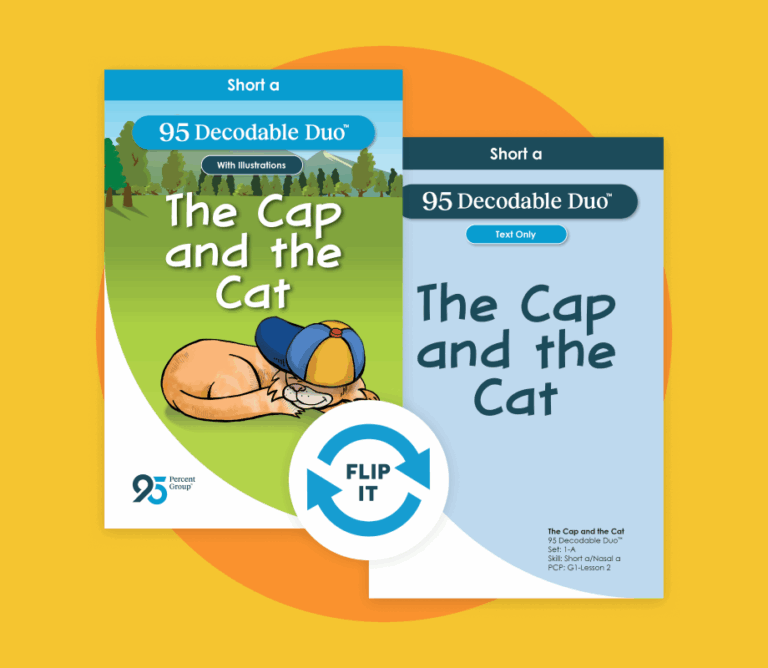
Many young readers in K-1 encounter challenges in connecting speech sounds to print on the page. With 95 Decodable Duo books, students practice decoding while building confidence in their reading ability. 95 Decodable Duo features a target phonics skill that aligns with the scope and sequence of 95 Phonics Core Program®. The books are cumulatively decodable and include phonics skills taught in previous lessons.
Their flip format makes this decodable set unique. They are designed to help students sharpen their decoding skills as they read the text-only version first. After they’ve mastered the sound-spelling relationships in a 95 Decodable Duo, students flip the book over to enjoy the same story with fun, engaging illustrations. Their strategic design reinforces effective decoding habits, asking students to rely on their sound-spelling knowledge to read the text.
95 Readables™—for grades 2-5
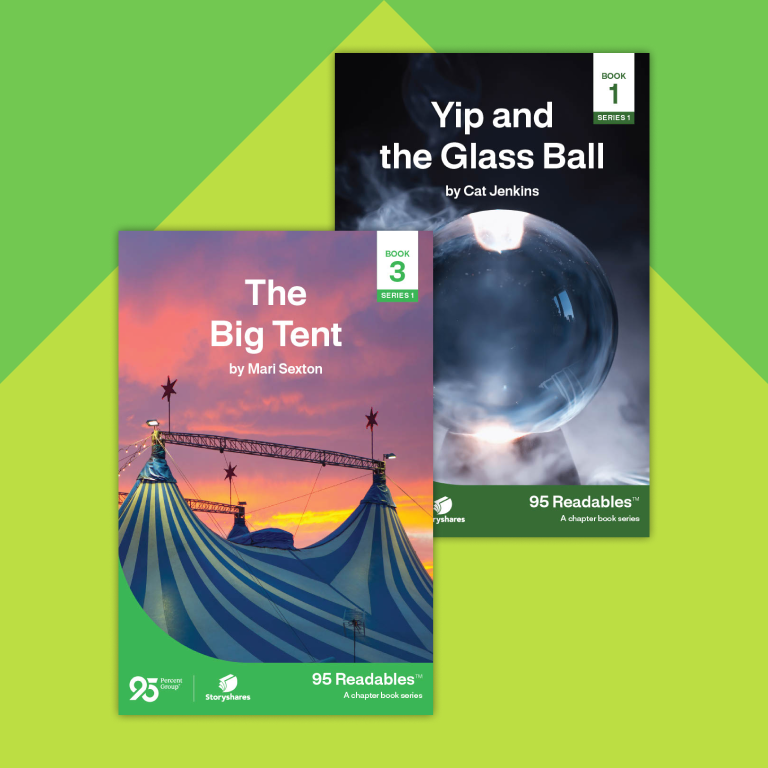
Educators have been asking for decodable texts aligned with 95 Phonics Core Program® for growing readers…and we listened. In partnership with the global team at Storyshares, we designed 95 Readables™, an evidence-based, innovative series of chapter books for grades 2–5, including both a fiction and nonfiction series.
Featuring vibrant photography and dynamic writing, chapters are directly aligned with weekly phonics instruction, enabling students to apply newly learned patterns in context. Each book features a phonics guide at the beginning to support reading accuracy.
95 Readables™ fiction series
The 95 Readables fiction series ensures students’ first interactions with chapter books are accessible and engaging. Following a sequential and cumulative format aligned with 95 Phonics Core Program, the books share fun, age-appropriate themes that cultivate a love of reading with relatable characters and eye-catching photography while reinforcing critical reading skills. The theme for each grade is consistent throughout the series, providing students with characters and settings they will return to all year. Each series includes a Teacher’s Guide with vocabulary, comprehension questions, extension activities, writing prompts, and more.
On the new 95 Readables series, Laura Stewart explains, “Heidi Mesmer—a researcher who did a study on decodable texts—said decodable texts are like training wheels, especially in the early grades. They gradually come off. I think of these books as bridges. They’re like bridges to chapter books. They are chapter books, but they are bridges to more complex text.”
NEW: 95 Readables™ nonfiction series

As upper elementary classroom learning becomes more text-heavy, students without strong reading skills risk falling behind. With science-themed content that sparks curiosity in learning about the natural world and scaffolds literacy success, these 95 Readables nonfiction titles invite students to explore, question, and grow. Each grade-level series of chapter books builds cross-curricular knowledge while providing decoding practice that aligns perfectly with 95 Phonics Core Program instruction.
“For many of our kids, this series gives them an accessible way to get into very grown-up books with grown-up content,” says Laura Stewart, “that also gives them the confidence that they need to have those incremental steps of success that will allow them to persevere when they get into more challenging text.”
Decodables for Tier 2 intervention instruction
95 Readables™—fiction series for grades 6-8
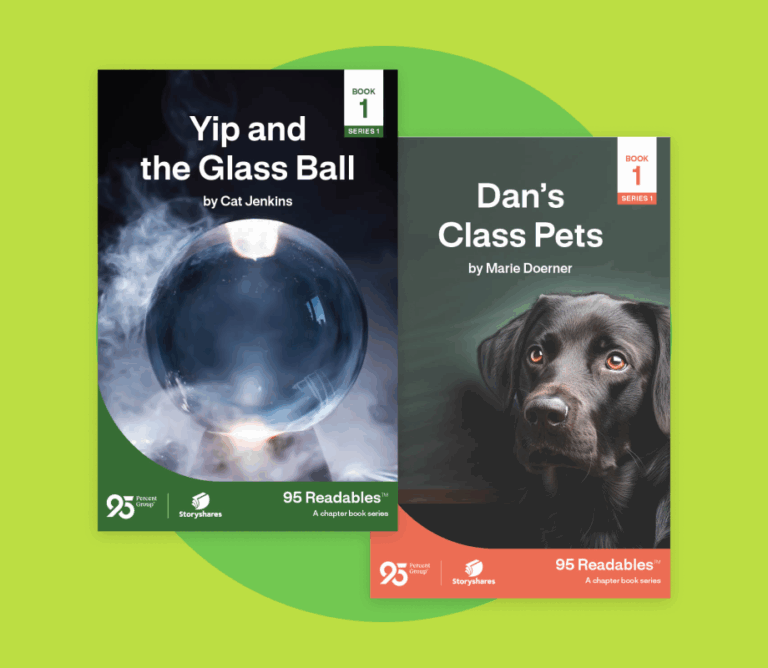
How did this series come about? Educators asked for decodable text aligned with 95 Phonics Lesson Library® for older students who need additional support—and once again we responded. This set of 95 Readables are unique chapter books aligned with 95 Phonics Lesson Library that allow for immediate practice of newly learned skills for students in grades 6-8.
These entertaining fiction chapter books offer a unique opportunity for students in Tier 2 to practice skills and build confidence with chapter books that meet them where they are. This newest addition to our One95 Literacy Ecosystem™ ensures students and teachers can:
- Follow a sequential and cumulative format aligned with 95 Phonics Lesson Library
- Engage with stories that are both topically and culturally relevant for students in grades 6-8
- Get the most out of instruction with accompanying guides and companions that reinforce vocabulary, comprehension, and writing practice
Cracking the code with 95 Readables fiction and nonfiction
95 Readables series of fiction and nonfiction decodables were developed in partnership with Storyshares. For this post, we spoke with Louise Baigelman, Storyshares founder and CEO, asking her what she loves the most about the series. Here’s what she told us.
“There’s this huge gap when it comes to really engaging, decodable content. Typically, we see this for grades 3 and up, but it really starts happening in grade 2, because so many decodables are created for and intended for younger kids—pre-K, kindergarten, first graders.”
“We feel like we’ve cracked the code for how to make content that is structured—giving students targeted practice for their phonics skills and their foundational skills—while also getting them excited to read.”
“To be able to check all those boxes at once—exciting to read, aligning with the expectations and rigorous content that they need to be accessing, whether it’s Tier 1, grades 2 to 5, or Tier 2, in the fiction series for grades 6-8—that’s a pretty novel thing, because so much of the focus has primarily been on those early elementary, younger ages and grades.”
“That’s a concept we invented that has really taken off—the idea of a decodable chapter book. It feels a little bit higher level, but also does the work of a decodable, which is structured literacy along a scope and sequence.”
We asked Louise about the process for developing the newest nonfiction series for grades 2–5.
“What I love about the nonfiction series is it draws on something we’re doing a lot internally at Storyshares, too. We bring together all the pieces, and think about a few simple concepts that make a big difference—like using photographs for the imagery, instead of always going to line drawings or cartoon drawings. This helps to make the content really rich for students to engage with, drawing them into what they’re reading, while also giving them really targeted practice on the skills they need to strengthen.”
“We hear from teachers often, saying that students have finally finished their first book, a student who has not previously been successful in reading, just finished their first full book, and not only that, but they asked for another one, and they shared it with their peers!”
“And so, for students who have been struggling with reading, so often they have developed negative associations with reading, and they don’t find it enjoyable. It can be stigmatizing and disheartening. By providing books for these students that are not only interesting to them and that build their knowledge, but also make them feel successful in reading—that they can read and want to read, we’re able to transform those students’ relationships with reading to put them on a pathway to become stronger readers, and that’s very powerful for us.”
Decodables to meet every student (and teacher) where they’re at
We’re excited to offer this complete decodable collection in our One95 Literacy Ecosystem™. From innovative flip book and chapter book decodables developing Tier 1 foundational skills for grades K–5, to decodable and engaging fiction chapter books for Tier 2 intervention in grades 6–8, teachers can find what they need to support students in becoming strong and confident readers who discover the joy in reading. Our companion teacher guides and professional learning opportunities build on the science of reading to empower teachers with the knowledge, resources, and support to help their students get the most from instruction.
Additional Resources

Decodable books: A comprehensive guide for educators and parents
Get a clear, practical overview of what makes a decodable text effective—and how to use them to support confident early readers at home and in the classroom.

The power of decodables in learning to read
Learn why decodable texts are essential for building strong sound-to-print connections and setting students up for reading success from the start.

Watch On Demand: The Power of Decodables in Learning to Read
Hear from literacy experts as they break down what makes a decodable truly effective and how 95 Decodable Duos elevate K–1 instruction.
References
- Castles, A., Rastle, K., & Nation, K. (2018). Ending the Reading Wars: Reading Acquisition From Novice to Expert. Psychological Science in the Public Interest, 19(1), 5-51. https://doi.org/10.1177/1529100618772271 (Original work published 2018)
- Ehri, L.C. (2014). Orthographic mapping in the acquisition of sight word reading, spelling memory, and vocabulary learning. Scientific Studies of Reading, 18(1), pages 5-21.
- Mesmer, H. A. E. (2005). Text Decodability and the First-grade Reader. Reading & Writing Quarterly, 21(1), 61–86. https://doi.org/10.1080/10573560590523667