Leveraging strategic funding for literacy success
Strategic funding can unlock meaningful literacy progress when schools align resources with research‑based practices and long‑term goals. By focusing investments on coherent instruction and educator support, districts can make lasting gains in reading growth and capacity.

At 95 Percent Group, we’ve seen firsthand how districts and schools that approach grant opportunities with intentionality and foresight build sustainable, high-quality literacy programs—programs that not only close achievement gaps but also cultivate lifelong readers and confident learners. We’ve created this blog post for principals, district administrators, and funding teams who recognize that grant writing is more than simply submitting applications—it’s about crafting a vision with clear goals to get there and then finding funding opportunities at the federal, state, and local levels that align with your vision and goals.
Use this short 5-Step Quick Start Guide as a focal point and checklist to get your team off to a solid start.
5-Step Quick Start Guide
- Step 1: Craft the vision. Collaboration matters. As you embark on your grant planning process, gather your team to bring forward your vision. Engage all invested parties in your process right from the start—principals, administrators, teachers, special educators, reading specialists, data analysts—to build a cohesive, compelling narrative.
- Step 2: Define clear literacy goals. Work together to clearly define your district’s literacy goals—these are the steps you’ll take to make the vision reality. Clear literacy goals will help you in Step 3 to zero in on which funding streams best align with your objectives. And make sure to include a plan for sustainability in your goals.
- Step 3: Research options to make the best grant selection. With your vision and the goals to get there clearly defined, you’re ready for the research and grant selection phase—you’ll find a spectrum of grant types identified and secured by a range of school districts we’ve supported with 95 Percent Group products and professional learning.
- Step 4: Align your needs with proven solutions. 95 Percent Group’s structured literacy solutions are perfectly positioned to meet—and even exceed—the evidence-based criteria that grant programs demand. Our curriculum and professional learning offerings are grounded in the science of reading and aligned with ESSA evidence standards, making them an ideal match for grants focused on improving foundational reading skills, enhancing educator effectiveness, and strengthening MTSS frameworks.
- Step 5: Focus on effective grant management. Once you’ve secured funding, an effective grant management plan requires structured implementation and a commitment to sustainability. Share knowledge and learn from other’s successes.
By thoughtfully planning each step—creating your vision, articulating clear goals, researching relevant grants, aligning your needs with proven solutions, and implementing with integrity—you position your school or district to achieve measurable, sustainable gains in student reading proficiency.
Expert insights
For expert input, we interviewed Jim Monti, former Director of Educational Reform, Compliance & Technology at West Warwick Public Schools in Rhode Island. Monti has a twenty year history of writing, obtaining, and implementing competitive grants on a wide-array of services. In addition to writing successful grants, he is passionate about creating systemic structures to support the successful implementation of the grant dollars. Here is a summary of Jim Monti’s advice based on his experience in West Warwick Public Schools to help you think through the process from initial program visioning to long term sustainability.
The journey begins—vision and goals
West Warwick Public Schools started the funding process with a question: What is the vision for all of the work that’s going to take place? As they engaged that question, a shared vision became clear: They knew that they wanted all students to be fluent readers by the end of third grade.
A clear vision led to defining their goals—they created a step-by-step process to reach the vision.
- Goal #1: Develop a shared understanding of structured literacy through in-depth professional learning together.
- Goal #2: Identify and select a structured literacy program that honors both high-quality literature, but also high-quality phonics instruction and everything that goes along with that.
- Goal #3: Select interventions that align with the structured literacy program and enable targeting students specifically.
- Goal #4: Build an implementation plan that incorporates long-term sustainability from the start.
Evaluate the data
Analyzing their data informed the vision and goals by providing an honest analysis of faculty and students. They realized that they needed to do a lot of learning about structured literacy to get everyone on the same page, and they saw that they needed shared learning on structured literacy across all grades and roles. In looking at the student data, they discovered that the need for intervention was actually increasing each year. They could see that their Tier 1 program wasn’t working for them, and they weren’t identifying students properly for the right interventions.
Once they had identified the vision, defined their goals, and analyzed their data, they could move to the next step—looking at grants. This process allowed them to easily see which grants were in alignment.
Don’t put the cart before the horse
Jim Monti emphasized this key point about their successful grant journey:
“We started this work before we even started looking at grant availability and dollars, and before any funding streams became available.”
He continued: “If you know what your vision is, and you know what the steps are to achieve that vision, then you can actually start moving incrementally towards that. That’s key.” When you are prepared and know what you’re looking for, you’ll find the right matches and you’ll be ready to leverage opportunities quickly.
Identifying grants that align with the vision and goals
An important thing to bear in mind—the funding landscape is always changing. In addition to federal and state funding, Monti advises districts to look at local foundations in your state that support literacy as part of their mission. Make sure that you have a strong alignment between what your goals and vision are as a school district and the goals and vision of the funder. And when you find that, you’re ready to go all in. Writing the grant application will flow directly from the work you’ve done defining your vision, goals, and clear steps to achieve your plan. Make sure to align your special education funding with the literacy vision in your district—when you align all of these pieces, you’re moving together collectively—because you’ve included all the parties from the beginning in the literacy planning teams. This inclusive alignment gives you a big push forward. Everyone understands: “Here’s what we need to do, and every step that we take is going to get us to what we need to do.”

When you are singular in mind with everyone, and you’ve committed to the work together, it allows you to stay focused and not distracted by shiny things. We have always found the money, either through local, federal, or state opportunities…
Jim Monti
How West Warwick put their funds to work to support their vision
West Warwick Public Schools in Rhode Island was an early adopter of 95 Literacy Intervention System™. 95 Literacy Intervention System is a comprehensive digital solution designed to effectively diagnose deficits, deliver targeted instruction, and move students out of intervention as soon as possible. Jim Monti, former Director of Educational Reform, Compliance, and Technology at West Warwick Public Schools, led his district in adoption of 95 Literacy Intervention System as an early innovation partner.
They received funding for the implementation of a new Tier 1 curriculum after applying for a Comprehensive Literacy State Development (CLSD) Grant, a federally funded competitive grant that aims to improve literacy skills and development for children from birth through grade 12. The district used ESSER II & III funds to implement a Walk to Intervention Tier 2 program using 95 Phonics Screener for Intervention™, and 95 Phonics Lesson Library™ kits.
Ready to turn funding into meaningful outcomes?
95 Percent Group’s structured literacy solutions are perfectly positioned to meet—and even exceed—the evidence-based criteria that grant programs demand. Our curriculum and professional learning offerings are grounded in the science of reading and aligned with ESSA evidence standards, making them an ideal match for grants focused on improving foundational reading skills, enhancing educator effectiveness, and strengthening MTSS frameworks.
Take the next step toward building a sustainable, evidence-based literacy initiative in your school or district. Aligned with key grant priorities and supported by proven results, our solutions offer a powerful opportunity to invest in what works—and unlock the full potential of every student. From large districts to small schools, 95 Percent Group’s structured literacy solutions are making a measurable impact in diverse learning communities across the country.
Maximize resources with our proven, scalable solutions for every tier.
Turn grant funding into measurable literacy success.
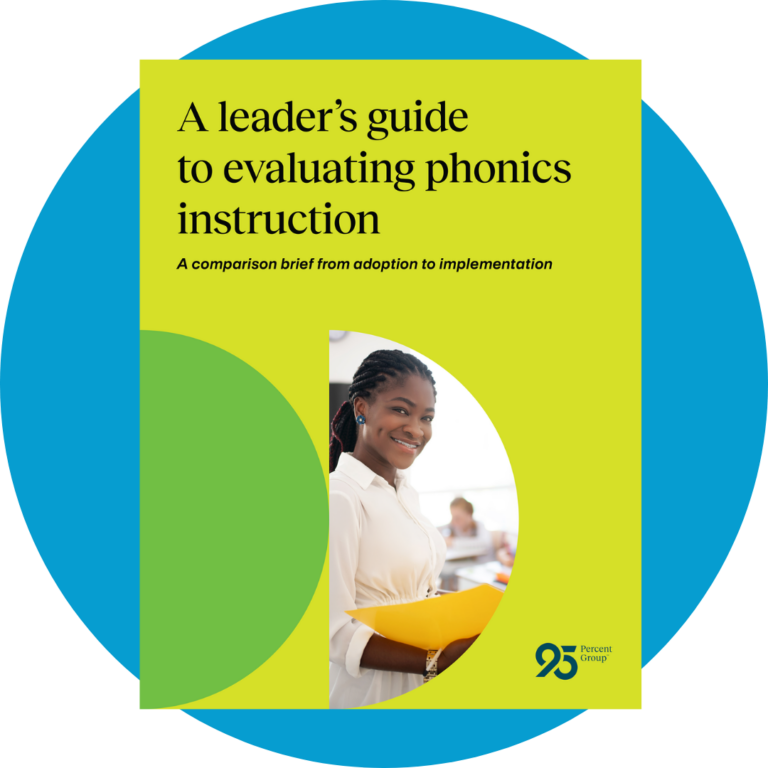
Ensure funding translates into stronger instruction
Securing funding is only the beginning of a successful literacy initiative. Learn how to evaluate phonics instruction, identify opportunities for growth, and support evidence-based implementation with A leader’s guide to evaluating phonics instruction.
Learn more
Explore our state-approved literacy solutions based in the science of reading. 95 Percent Group is a trusted provider of literacy solutions that meet state guidelines and policies for improving literacy outcomes. Supplemental and intervention products, as well as professional learning from our integrated literacy ecosystem, have been approved or recommended in states across the country.
Read more expert insights from Jim Monti
You can read a more detailed account of the West Warwick funding journey with Jim Monti—you will learn more about:
- how they implemented Tier 1 and 2 programs supported by two million dollars in grants
- the function of their Grant Leadership Team and Literacy Planning Team
- how they organized the work to create and deliver professional learning to all their educators
- how they designed for long-term sustainability from the very beginning
- and more…
From funding to outcomes, learn what it takes–click here to read part two.
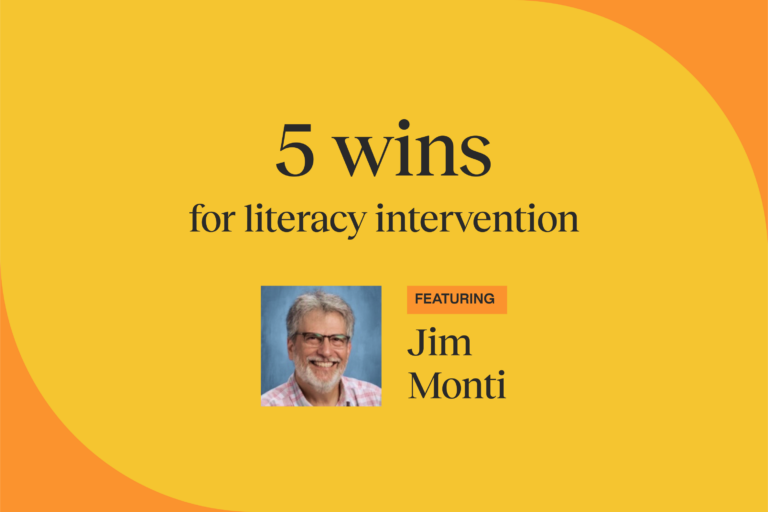
Hear more from Jim Monti
Getting literacy intervention right doesn’t have to be so hard! Join Jim Monti, former director at West Warwick Public Schools, to learn about his district’s journey and the 5 essential intervention outcomes that can be achieved in your school or district after implementing 95 Literacy Intervention System™.