What is the science of reading?
Explore the latest evidence with insights from thought leaders and our guide to real-world science of reading implementation.


The science of reading defined
The science of reading is a dynamic body of convergent evidence that informs effective instruction in all areas of literacy development.
This body of knowledge is drawn from decades of research in the fields of:
• Cognitive, developmental, and school psychology
• Education, including special education
• Neuroscience and implementation science
• Linguistics
Proven and effective reading instruction is grounded in decades of interdisciplinary research—not trends, preferences, or one-size-fits-all approaches.

Understanding the science of reading
The science of reading emerged in response to widespread reading challenges linked to ineffective instructional approaches. Its evidence-based practices map to how the brain learns to read.
Structured literacy is the explicit, systematic, and cumulative approach to instruction, based on the science of reading, that relies on ongoing assessment. Core concepts include the five pillars of reading—phonemic awareness, phonics, fluency, vocabulary, and comprehension—that are essential foundational skills.

For a successful and sustainable implementation of structured literacy, you have to build a culture of continuous improvement. What does that look like? I think you have to build a culture that emphasizes ‘We’re all in this together.’ And frankly, I think one of the most critical elements for managing change and continuous improvement is to have fearless conversations about data—where we are looking at data and confronting any gaps we discover in the data.
Laura Stewart
Explore the research
Designed with guidance from the Every Student Succeeds Act (ESSA), our efficacy studies meet the highest standards.

A quick view of our evidence
Learn more about our research validations and third-party, independent research in schools across the United States.

A summary of our research
Explore the evidence behind our trusted, proven literacy solutions, all part of the One95 Literacy Ecosystem™.
The award-winning eBook, Science of Reading 3.0: Widening the lens on literacy
Science of Reading 3.0 expands the literacy conversation beyond research alone, connecting the science of reading with effective instruction, implementation, and leadership. This free eBook helps educators turn evidence-based knowledge into classroom practice that improves outcomes for all students.
A broader view of reading science
Explore how reading research works alongside the science and art of teaching, learning theory, and leadership to support strong literacy ecosystems.
From evidence to action
Learn how to move research into daily instruction and system-wide practice with practical insights designed for real classrooms and schools.
Equity-driven literacy practices
Strengthen structured literacy while meeting the diverse needs of learners across grades, settings, and abilities.

Delivering on the promise of education starts with the mastery of the most fundamental skill—the ability to read. Literacy is the foundation of every student’s learning journey and future success. Of equal importance, reading can bring immense joy to life.
Laura Stewart
Implementing the science of reading
Moving the science of reading from theory into practice requires a systematic approach. From curriculum design to instruction to assessments, each piece plays a vital role in improving your students’ literacy outcomes.

Curriculum design
Integrating the science of reading into your ELA curriculum means being thoughtful and intentional. Here are some principles to keep in mind:
Be discerning.
Know the criteria that curriculum evaluation tools use and hold high standards for evidence and efficacy.
Focus on alignment.
Select resources that are consistent across all tiers of instruction—consistency compounds.
Less is more.
Integration is not additive; adding more programs doesn’t guarantee better results.
De-implement when needed.
Sometimes you must “pull weeds to plant flowers.”

Discover Science of Reading Lessons Learned
Our new eBook features stories from real teachers in real schools—and 20 lessons that have shaped the literacy field over the last 20 years! Get your FREE copy and see what’s driving real results in reading instruction. Inside you’ll gain insights into:
Leadership in action
How visionary school leaders successfully transformed their literacy instruction by embracing science-based approaches
Real-world implementation
Proven implementation strategies from real school partnerships including practical lessons on professional development, teacher coaching, and sustaining change
Making change happen
The critical decision-making processes that empowers educators to boldly adopt evidence-based reading instruction
Explicit instruction cannot stop after first or second grade. Students in third grade and beyond must continue to master the essential components of reading, learning tools and strategies to decode complex, multisyllabic words and applying knowledge of syllables, morphemes, and word origins to read, spell, and comprehend words.”
Dehaene, 2009
Instruction designed for each tier
95 Percent group’s aligned resources meet all students where they are—to close gaps and accelerate students toward grade level reading.
With core instruction that begins in Tier 1 in whole or small group teaching, and moves to small group or one-to-one skill intervention in Tiers 2 and 3, all of our resources are aligned and designed to increase in time, intensity and focus across the tiers of instruction.
Tier 1: Student success in phonics
95 Tier 1 Phonics Solution helps teachers build foundational skills with whole or small group instruction, reducing the need for intervention and helping students succeed as grade-level readers.
Tier 2: Targeted intervention
95 Tier 2 Phonics Solution puts assessments, grouping, instruction, and practice in one place, empowering you to deliver effective, evidence-based intervention—moving students toward stronger reading skills.
Tier 3: Intensive intervention
95 Tier 3 identifies skill gaps and delivers personalized intensive intervention for students needing extra support, including those with dyslexia. Daily structured support and professional learning drive success.
Assessment: Diagnostic and prescriptive
95 Tier 2 Phonics Solution provides you with the assessment, management, and instructional tools needed to deliver data-driven support for students who need phonics intervention—all in one resource.

Professional development
Sustainable student success starts with empowered educators. Our professional learning offers the knowledge, support, and strategies needed to elevate literacy instruction and drive real, sustainable results.
Product orientation
From public workshops to on-site training, we help educators build familiarity with 95 Percent Group content and core componentry.
Structured literacy training
Bring structured literacy to life with confidence. Our offerings include flexible asynchronous guidance through Top 10 Tools® by 95 Percent Group’s eLearning courses.
Coaching
Grounded in observation, modeling, authentic practice, and targeted feedback, our tailored coaching sustains implementation and delivers enduring outcomes.
Implementation services
Offering comprehensive guidance and customized resources for every phase of the implementation journey, our services emphasize change management and capacity building to ensure lasting impact.
Frequently asked questions
Here are the two top questions educators ask as they begin their science of reading journey. Explore our FAQ page or get in touch for more information. We are here to help you.
The science of reading is the current body of evidence on how children learn to read. A structured literacy approach, based in the science of reading, is the best approach for every child. The evidence we have is consistent and overwhelming: we know that explicit and systematic phonics instruction typically leads to better outcomes in learning to read.
It replaces reading practices and theories—such as three cueing, balanced literacy, and whole-language instruction—that have been proven false. For example, there was a pervasive concept that children should use pictures or context to guess at an unknown word. That is not an effective and efficient route to word recognition; utilizing decoding, however, is an efficient and effective route to word recognition. Another pervasive and persistent idea is that there are hundreds of ways to learn to read, and no set of instructional principles that will be the most effective for most children. These are just not true, and the science of reading has helped to shine a light on that.
The science of reading is an explicit, systematic approach grounded in neuroscience, linguistics, and psychology. Unlike methods of instruction that focus on intuition or anecdotal success, science of reading curriculums include direct instruction in phonological awareness, phonics, vocabulary, fluency, and comprehension.
Teachers can apply the science of reading through explicit, sequential instruction in foundational skills like phonemic awareness and phonics. Multimodal activities and ample practice help reinforce learning, while structured routines, decodable texts, and ongoing progress monitoring ensure all students develop strong, transferable reading skills.
Legislation across more than 40 states now requires evidence-based reading instruction, reflecting a nationwide shift toward research-backed practices. The science of reading aligns with these mandates by offering proven, structured approaches that support stronger literacy outcomes.
Science of Reading 2.0: Implementation made easy
Our original science of reading eBook remains a valuable resource for educators looking to strengthen literacy instruction through evidence based practices and implementation insights. Unlock the power of literacy for your students with this easy-to-use guide.

Putting reading research into practice
Today, we know a great deal about what works in reading instruction thanks to the science of reading. But our work as educators doesn’t end there—effective implementation is essential. Implementation science bridges the gap between research and real-world practice, providing insight on how to realize literacy success.
Evidence-aligned resources
Enhance outcomes with the right instructional materials, at the right time, backed by high-quality research.
Instructional practices
Follow best practices for literacy instruction to help students stay engaged, develop new skills, and become independent readers.
Strategic coaching
Provide feedback and support to help educators build knowledge, confidence, and instructional ability.
Science of reading resources for today
Learn more with real-world impact stories, expert insights, practical tips for implementation, and more.

Fostering a love of reading in the digital age: Insights from teachers and parents
Our in-depth survey reveals how students engage with reading and what drives their habits, offering insights for educators and families to foster consistent, meaningful reading. By connecting reading to purpose and enjoyment, students build confidence and a love of learning.
95%
of K-8 literacy educators see a connection between a student’s reading ability and their desire to read independently.
Featured insights

Unlocking literacy for two decades
At 95 Percent Group, we’ve followed the science, creating an ecosystem of evidence-backed literacy solutions to empower teachers and developing readers.

Spotlight South Dakota: Transforming literacy instruction through teacher-led change
In South Dakota, teacher‑led change is transforming literacy instruction by empowering educators to drive continuous improvement and strengthen outcomes for learners. With intentional support and collaborative leadership, this approach is building more effective, sustainable reading instruction across classrooms.
96%
of first graders reached year‑end phonics proficiency — including English learners and students receiving intervention
Spotlight Colorado: This charter school network is transforming secondary literacy intervention
Colorado students are gaining confidence and making real progress in reading thanks to a charter school network’s focused literacy interventions. With intentional support and data-driven instruction, middle and high school learners are experiencing lasting growth and success.
Now we have four teachers using it [95 Percent Group resources] across all different learning levels. My load is so much lighter, and I am so much more effective.
Sam Weir Secondary literacy interventionist, Rocky Mountain Prep Charter School Network, Colorado


One solution for literacy instruction
Based on the science of reading and backed by nearly two decades of research, the One95 Literacy Ecosystem™ is proven to advance reading skills in students from diverse backgrounds, grades, and abilities.
It integrates evidence-aligned products and professional learning resources into one cohesive system for instruction across tiers—so you’re ready and able to help every child realize their reading potential.

95%
or more of students can learn to read with high-quality, evidence-based instruction.
Build your expertise
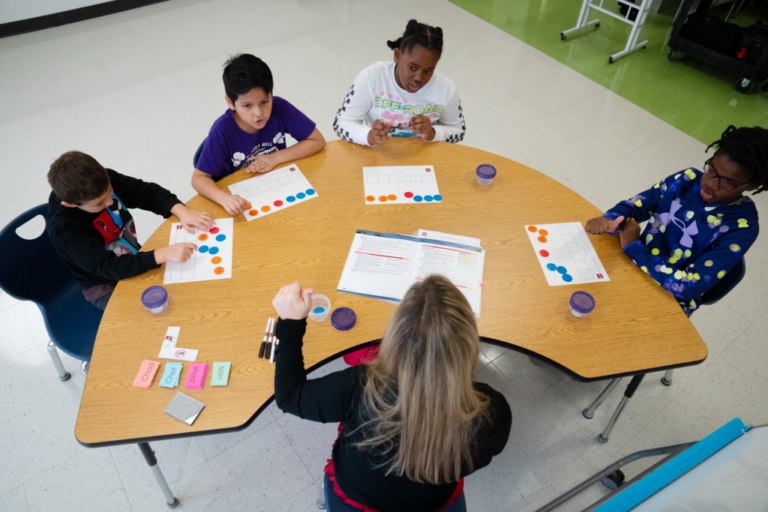
Improve your instructional practices, get support through ongoing coaching, or attend an upcoming workshop or webinar with experts in the Science of Reading.
60%
of elementary teachers have never been trained in strategies for teaching phonemic awareness, phonics, vocabulary, fluency, and comprehension (EAB Report on Literacy).
Get more content like this
Stay up to date on the latest insights, free resources, and more.
By completing this form, you indicate your consent to receiving marketing communications.