Insights
At 95 Percent Group, our pursuit of literacy extends far beyond the classroom. We’re committed to sharing research, resources, and expertise as we advance the science of reading and empower educators everywhere.

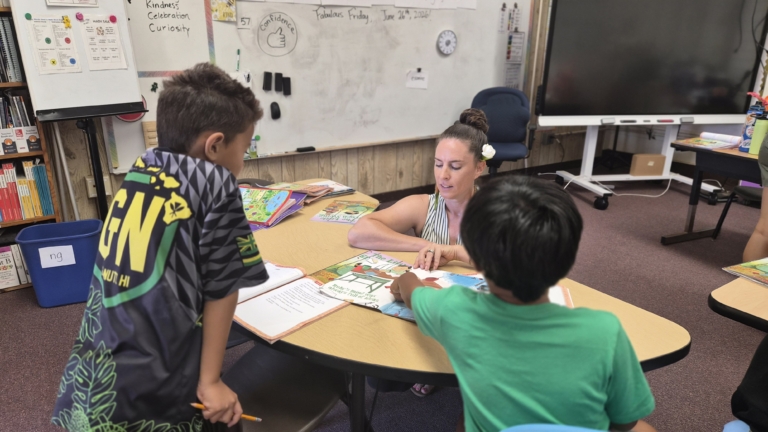
Spotlight Hawaii: Building foundational skills with one aligned system
What happens when an entire school system commits to teaching every child to read? On Kaua’i, elementary schools united around one literacy framework, creating consistent instruction, stronger support systems, and transformative results for students and educators alike.
81%
of students demonstrated typical growth, (2025-2026 school year)–a 10 percentage point increase from the prior year, achieved in a single school year.
As educators, our knowledge is our power. In sharing all that we know with one another, we can focus our impact on what matters most — unlocking the power of literacy for every child.
Laura Stewart
95 Percent Group announces availability of Spanish literacy tool
95 El muro de sonidos y deletreo addresses the critical need to provide educators who teach Spanish language arts with evidence-aligned tools for foundational instruction.
More students than ever are receiving instruction in Spanish, and it’s critical that we get it right. 95 El muro de sonidos y deletreo is a trusted, proven resource for helping students make meaningful, crosslinguistic connections between Spanish and English that strengthen their skills in both languages, which is the key to building strong biliteracy skills.

Dr. Antonio Fierro Literacy expert in residence at 95 Percent Group
Early literacy: What it is, why it matters, and how to support it
Early literacy lays the foundation for lifelong learning by developing the key skills children need to read with fluency and comprehension, and this post breaks down what it is, why it matters, and practical ways educators and families can support it.
It’s clear today that language development in the first three years of life lays the foundation for literacy acquisition. This foundation continues to be built upon or not, to be fostered and nourished or not, until a child arrives at school for the first time. And this is where we really see the differences.

Kayla Hindman Literacy Consultant, 95 Percent Group

How to choose a science of reading-aligned program
This comprehensive guide helps educators and school leaders navigate the process of selecting a science of reading-aligned literacy program including outlining key components to look for in evidence-based programs, red flags to avoid, and practical questions to ask vendors.
A literacy program chosen by a district or school isn’t just about materials—it shapes both how teachers teach literacy and therefore ultimately impacts how students learn to read.

Diana Betts, EdD Early Literacy Expert and Regional Consultant Manager
How schools can select the right reading intervention program
Choosing the right reading intervention program is one of the most consequential decisions a school or district leader can make. This guide walks you through what to look for, what questions to ask, and how to evaluate program fit—so you can stop guessing and start moving more students to proficiency.
There’s really no time to waste for our children that need the most support. Choosing the right intervention program, one that is both aligned with your Tier 1 instruction and aligned with the needs of your school or district is of critical importance.

Jacqueline Kilburn PL Consultant/Client Manager, 95 Percent Group
How to choose a K-5 phonics program
Choosing the right phonics program is a high-impact decision that shapes how effectively students learn to read. This guide highlights what research says about strong phonics instruction and how to evaluate programs for quality and fit. With the right approach, school leaders can ensure every K–5 student builds a solid foundation for lifelong literacy.
Learning to read is not natural. Our brains are not designed for learning to read, so our brain actually builds on biologically primary functions of speech and language.

Jennifer Delano-Gemzick, EdD Literacy expert and consultant, 95 Percent Group
The latest in literacy


Get more content like this
Stay up to date on the latest insights, free resources, and more.
By completing this form, you indicate your consent to receiving marketing communications.